
The laptop is closed, but the phone still lights up. A “quick check” at the table turns into ten minutes of scrolling. Dinner becomes another place where work thoughts interrupt. Keeping work from following me into family dinner required a few small, repeatable barriers rather than more willpower.
I am Dan Whitaker. I live in Raleigh with Sarah, Maya, and Ethan. I work in IT and security operations for a remote-first company. I have tried elaborate digital detox rules and complicated focus apps. The barriers that survive ordinary weeknights are the ones that are physical, simple, and visible to the whole household.
The Real Problem at the Table
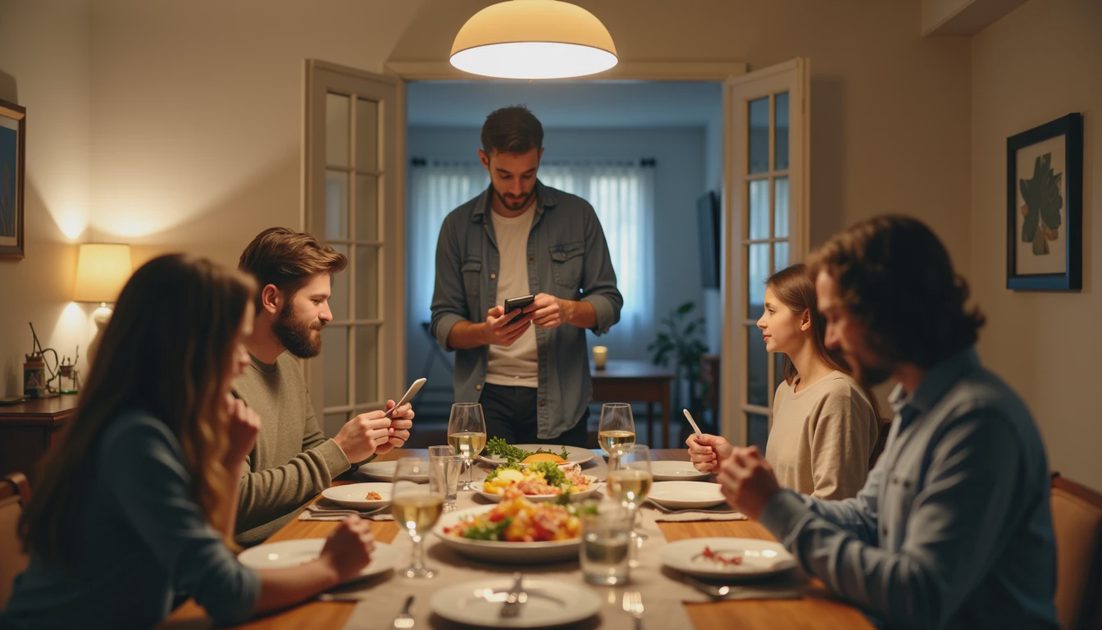
Here is the part that usually causes trouble: work devices stay within arm’s reach, and every notification feels like it might be urgent. The brain treats the buzz as a potential emergency even when it is only a status update. Without a clear stop, the evening never fully begins.
Barriers That Actually Work
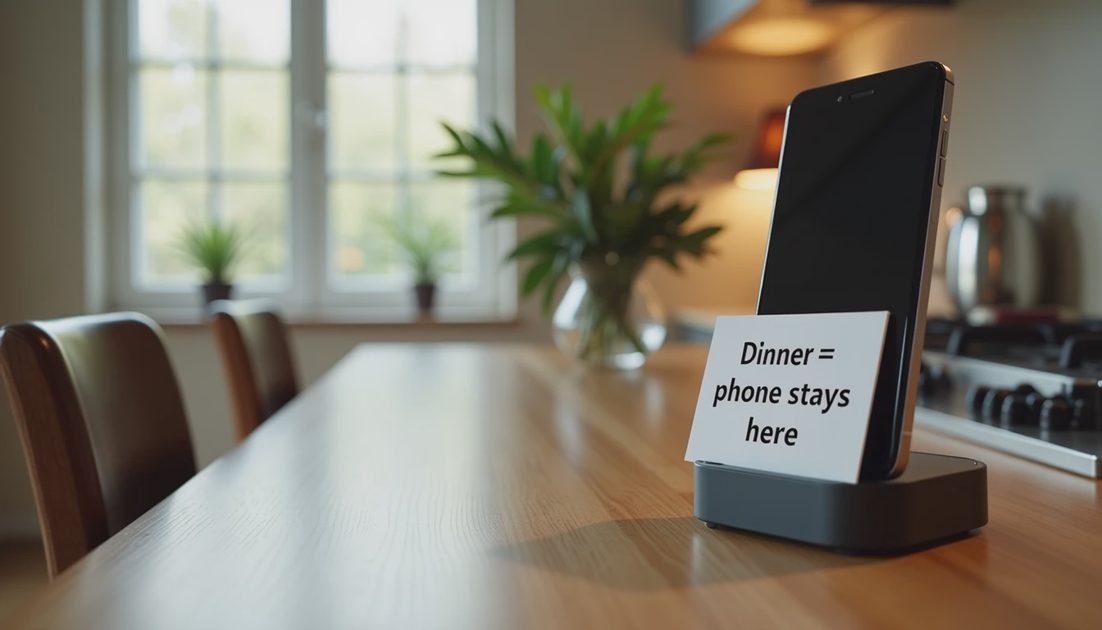
Phone stays on a charging shelf outside the kitchen and dining area during dinner.
Work laptop is already closed and plugged in at the work spot before cooking starts.
Do Not Disturb is on for everything except true emergencies (defined in advance).
The first ten minutes at the table are device-free by household agreement.
If something truly urgent arrives, it is handled away from the table and then the barrier goes back up.
What Changed After We Made the Barriers Visible
When the phone had a consistent home outside the dining area, the “just checking” reflex weakened. Kids noticed and started reminding me. Sarah noticed that conversations lasted longer. I noticed that the mental residue of the workday faded faster once the physical cues were gone.
Common Pushbacks and Simple Replies
Pushback | Simple Reply |
|---|---|
“What if something urgent happens?” | Define urgent in advance; everything else waits |
“I only need a second” | The second expands; the barrier prevents the expansion |
“My role requires constant access” | Most roles require reliable access during work hours, not during dinner |
“The kids still have devices” | Start with the adults; consistency teaches more than lectures |
The table reflects conversations I have had with other remote parents. The replies stay practical rather than moral.
Making It Stick on Hard Days
The system fails on the days when a project is on fire or a child is sick. On those days I still move the phone to the shelf even if I check it once during the meal. The visible barrier does part of the work so willpower does not have to do all of it. Over time the shelf becomes the default, and dinner becomes dinner again.
Made simple. Physical distance plus a short household agreement beats another productivity app. Less hassle. More life.
Why Physical Barriers Beat App Settings Alone
App-based Do Not Disturb is useful, but it is invisible. A phone on a shelf is visible to everyone at the table. The visibility turns the barrier into a shared household practice instead of a private setting that can be toggled without anyone noticing. Kids learn the pattern. Partners stop asking whether work is still “on.” The evening becomes more predictable.
I still fail the system on high-pressure days. The difference is that the failure is now obvious and short instead of the default state of the evening. That alone is progress worth keeping.
The practical test is whether dinner conversations last longer and whether the mental residue of the workday fades faster. After a few weeks of consistent barriers, both usually improve. The system is not about never checking work again. It is about giving family dinner a protected window so the rest of the evening has a chance to be something other than an extension of the workday.
Made simple means the barriers themselves stay light enough that they survive ordinary Tuesdays, not just the days when everyone is calm and the project is quiet.
I still keep the charging shelf rule even when I am the only adult home. The consistency makes the barrier automatic instead of a decision I have to remake every evening. The goal is not a perfect device-free evening every night. The goal is a protected window that is long enough for dinner to feel like dinner, so the rest of the evening has a chance to be something other than residual work. Less hassle. More life. The barriers are just the mechanism. I still fail the system on high-pressure days. The difference is that the failure is now obvious and short instead of the default state of the evening. That alone is progress worth keeping. Less hassle. More life. The barriers are simple enough that they survive ordinary Tuesdays.
App-based Do Not Disturb is useful, but it is invisible. A phone on a shelf is visible to everyone at the table. The visibility turns the barrier into a shared household practice instead of a private setting that can be toggled without anyone noticing. Kids learn the pattern. Partners stop asking whether work is still “on.” The evening becomes more predictable.
I still fail the system on high-pressure days. The difference is that the failure is now obvious and short instead of the default state of the evening. That alone is progress worth keeping.
Made simple. Physical distance plus a short household agreement beats another productivity app. Less hassle. More life.