
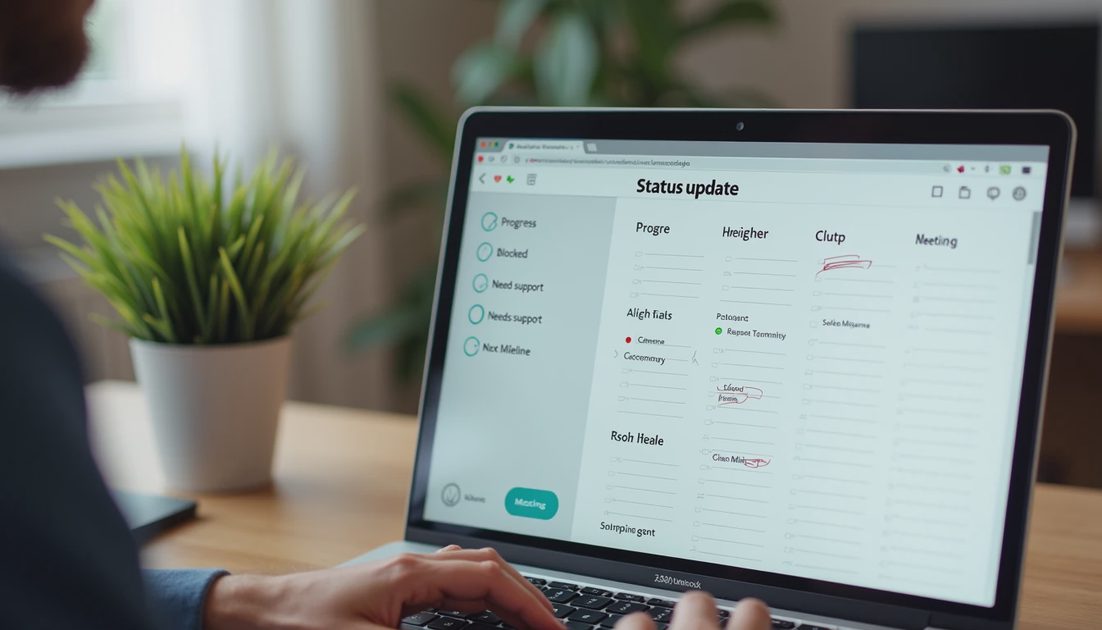
Most recurring status meetings exist because the written update was never made clear or reliable. People join calls to ask questions that could have been answered in a short, consistent format. When that format is used instead—what moved, what is blocked, what is needed next—many of those meetings become optional.
I am Dan Whitaker. I work with distributed teams and live in Raleigh with my family. I have watched teams regain hours of calendar time by replacing low-value status calls with a written update people can read on their own schedule. The remaining live conversations become shorter and more focused because the information transfer has already happened.
Why Status Meetings Multiply
Here is the part that usually causes trouble: without a reliable written home for progress and blockers, anxiety fills the gap. Managers schedule check-ins to feel informed. Contributors join to avoid being seen as unavailable. The calendar fills with meetings that exist to compensate for missing written clarity.
A Format That Stays Short
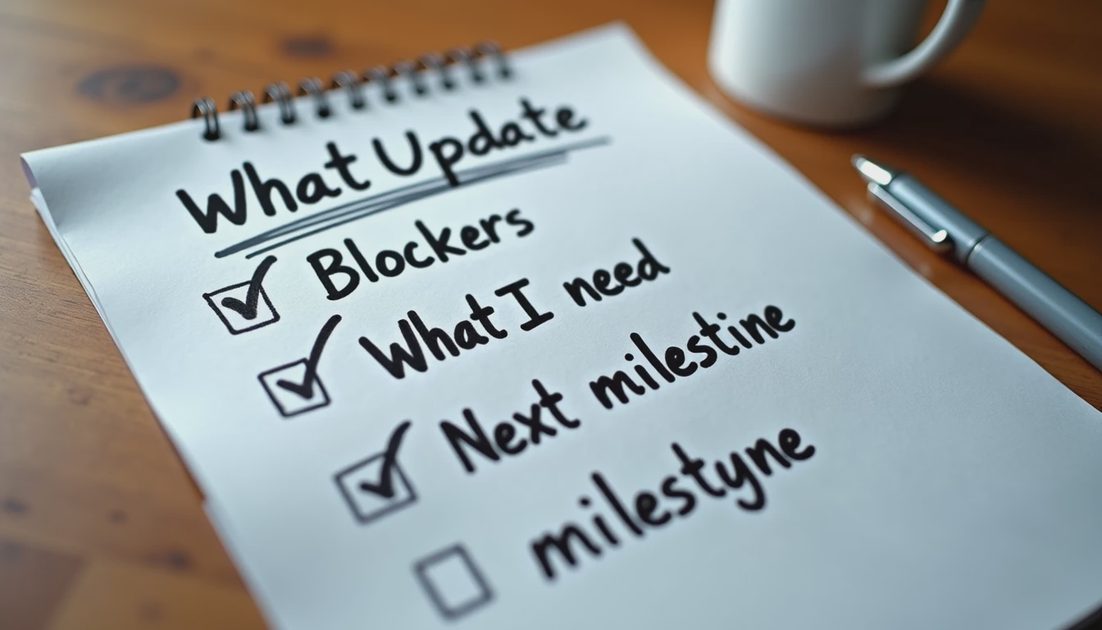
What moved since the last update (three bullets maximum)
What is blocked and why (one section)
What I need from others (specific requests)
Next visible milestone and rough timing
Four sections are enough. Anything longer tends to go unread. Anything shorter leaves the next person guessing.
How Teams Make the Switch
I introduce the format by writing the first few updates myself in the shared channel or document. Once people see that the information is complete and easy to scan, the recurring meeting can be shortened or removed. The key is consistency. When the format changes every week, the written update becomes another thing to decode instead of a thing to use.
Meeting Versus Written Update
Situation | Prefer Written Update | Prefer Live Meeting |
|---|---|---|
Routine progress share | Yes | No |
Blocker that needs discussion | Sometimes | Yes if decision required |
Cross-time-zone status | Yes | Rarely |
Relationship or sensitive feedback | No | Yes |
Decision with multiple stakeholders | Prep in writing first | Yes for the decision |
The table is a starting point. The goal is that live time is reserved for decisions and discussion, not for reading status aloud.
What Changes After the Format Sticks
Teams that switch often discover that some of their recurring meetings were never about decisions at all. They were about the anxiety of not knowing. Once the written update reliably removes that anxiety, the meeting can be retired without anyone feeling left out. Calendar space returns. Attention returns with it.
I still protect a few live conversations for the decisions and relationships that need them. The written format does not eliminate those meetings. It eliminates the ones that existed only because information had no other reliable place to live.
Made simple. Write the status so people can act without a meeting. Less hassle. More life.
The format only works if it is consistent. People learn where to look for progress, blockers, and requests. When the format drifts, trust in the written update drops and the meetings creep back in. I keep a one-line reminder in the team wiki: “If it is status, write it. If it is a decision, meet.”
I have seen teams cut two or three weekly check-ins after the format became reliable. The time returned to the calendar is usually more valuable than the meetings that used to fill it. Contributors report fewer context-switching interruptions. Managers report that they still feel informed because the written record is searchable and complete.
The practical test is whether people can act on the update without sending a clarifying message. If they can, the format is working. If they cannot, one of the four sections needs more specificity—usually “what I need from others” or “next milestone.”
That is the trade I keep making: fewer meetings, clearer information, and more time for the work the meetings used to interrupt. Less hassle on the calendar is the result worth protecting.
I still use live meetings when a decision needs real discussion or when relationships need the bandwidth of voice. The written format does not eliminate those meetings. It eliminates the ones that existed only because information had no other reliable home. The meeting earns its place or it loses its slot.
Made simple. A consistent written format gives information a reliable home so meetings can be reserved for decisions. The written update becomes the default. The meeting becomes the exception. That reversal is the point.
Teams that protect this reversal usually keep it. The ones that let the format drift slowly watch the meetings return. Consistency is the maintenance cost, and it is lower than the cost of another recurring status call.
Less hassle. More life. The calendar should serve the work, not the other way around.
I also ask the person who owns the update to include one concrete next step that does not require a meeting to start. That single line often prevents the “we should sync” reflex that recreates the meeting the format was meant to replace. When the next step is already visible, people can move without waiting for another call.