
Remote work is often sold as freedom. In practice it can quietly become a cage of permanent availability, unclear boundaries, and technical interruptions that follow you from room to room. The same flexibility that was supposed to help expands until every hour feels potentially on-call.
I am Dan Whitaker. I live in Raleigh with Sarah, Maya, and Ethan. I work as an IT & Security Operations lead at a remote-first company. I have watched the freedom of remote work turn into a low-grade trap for people who never drew clear edges around the workday. The trap is not dramatic. It is the steady erosion of evenings, weekends, and attention.
How Flexibility Becomes a Cage
Here is the part that usually causes trouble: the absence of a commute and a fixed office removes the natural signals that used to end the day. Without those signals, work expands to fill the available space. Notifications keep arriving. The laptop stays within reach. “I can be flexible” slowly becomes “I am always reachable.”
Parents feel it when dinner is interrupted by a “quick” check. Managers feel it when every time zone assumes they can take one more call. Individual contributors feel it when the evening is spent reconstructing open loops that never got a clean handoff. The cage is made of small, reasonable-seeming choices that add up.
Warning Signs I Watch For
The laptop is still open after the household has moved to evening mode.
Phone checks at the table have become automatic.
Early or late meetings keep landing on the same people.
There is no written definition of what counts as urgent after hours.
The first hour of the weekend is spent “just catching up.”
Any one of these can be temporary. Several together usually mean the edges have disappeared.
Drawing Edges Without Losing the Benefit
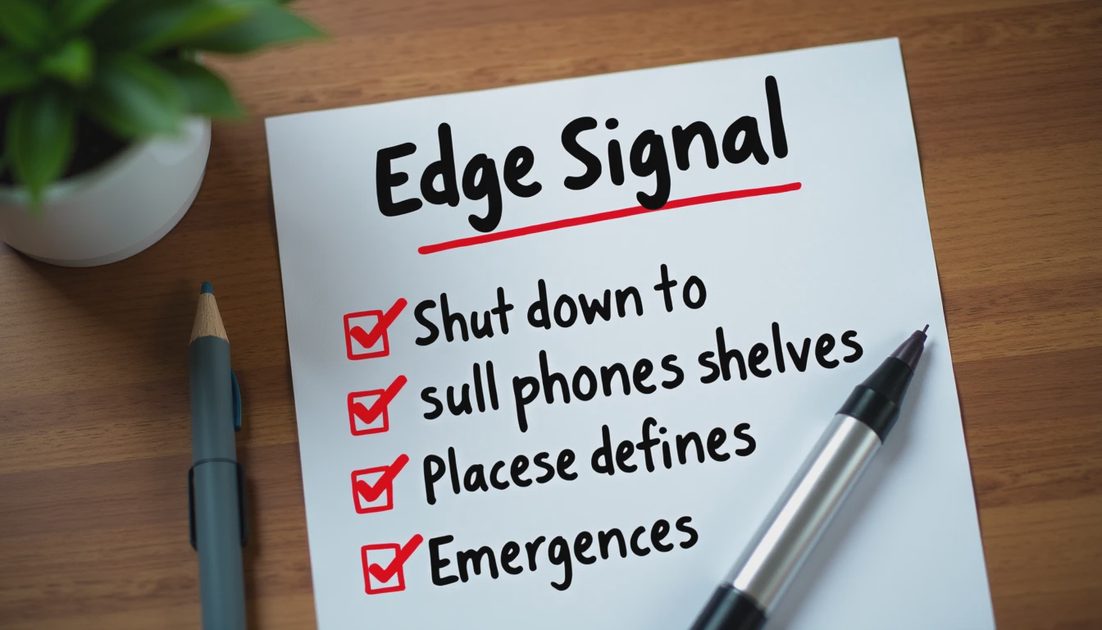
Flexibility is only useful if it has edges. I define the actual working window and protect it. I give every tool a clear job and turn off the rest of its noise. I create a visible end-of-day signal the household can see—closing the laptop, putting the phone on a charging shelf, and stepping away from the work area.
These moves do not require a new app or a perfect routine. They require a decision that the workday ends, and a few physical cues that make the decision visible. Once the edges are in place, the remaining flexibility feels like a benefit again instead of a trap.
Practical Edge-Setting Moves
Edge | Simple Implementation | Why It Helps |
|---|---|---|
End of workday | Laptop closed and moved to charging spot | Visible signal to brain and household |
Dinner window | Phone on shelf outside the kitchen | Removes the “quick check” reflex |
After-hours urgency | Written definition of true emergencies | Stops everything from feeling urgent |
Time-zone load | Labels + rotation of early/late slots | Prevents the same people from absorbing the cost |
Tool noise | Aggressive notification defaults | Protects attention inside the working window |
The table is a starting point, not a complete system. The goal is enough structure that flexibility has somewhere to stop.
What Changes When the Edges Hold
People who restore clear edges usually report that evenings feel less mental and that the workday itself becomes more focused. The work is still there. The difference is that it has a container. The container is what turns flexibility back into something that supports life instead of consuming it.
I still fail the system on high-pressure weeks. The difference is that the failure is now obvious and temporary instead of the default state of every evening. That alone is progress worth keeping.
Made simple. Flexibility without edges becomes a cage. Draw the edges on purpose. Less hassle. More life.

The practical test is whether the household can predict when work ends. If the answer is usually yes, the edges are holding. If the answer is usually no, the edges need to be redrawn more clearly and more visibly. Flexibility only feels like freedom when the people living with it can trust that it has a stopping point.
I still keep a short note of the edges that matter most in our house: laptop closed by a consistent time, phone off the table during dinner, and a written definition of what counts as after-hours urgent. The note is not elaborate. It is specific enough that everyone in the household can recognize when the system is working and when it has slipped.
That specificity is what turns a vague intention into a practice the whole household can support.
I have watched the same pattern in colleagues and neighbors. The people who recover the feeling of flexibility are not the ones with the most sophisticated tools. They are the ones who decided the workday has a visible end and then protected that end with a few physical cues the whole household can recognize.