
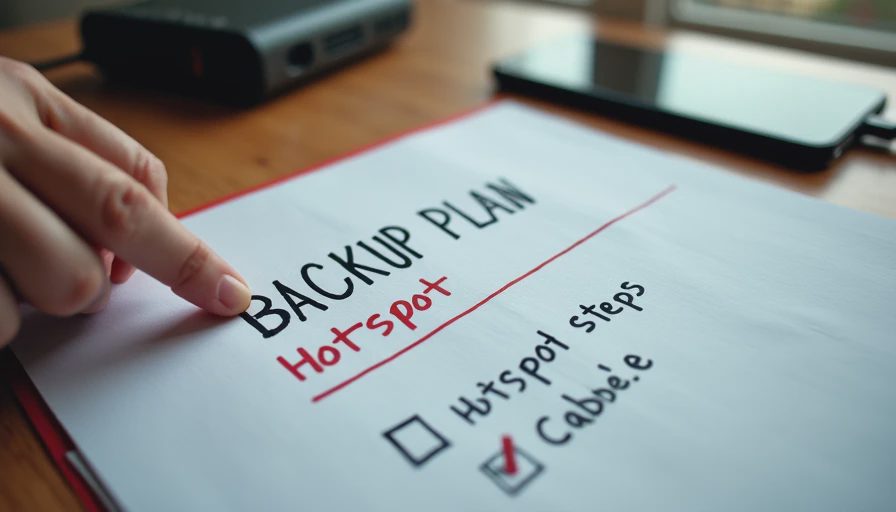
A backup plan only works if it is written down and tested once. When the main connection fails mid-meeting or the power blips during a deadline, inventing the response under stress usually wastes more time than the outage itself. I keep a single page near the desk that covers the essentials so anyone in the house can follow it.
I am Dan Whitaker. I work in IT and security operations and live in Raleigh with my family. I have seen too many workdays derailed by outages that were recoverable in minutes if the steps had been decided in advance. The plan is deliberately short so it can be used when attention is limited.
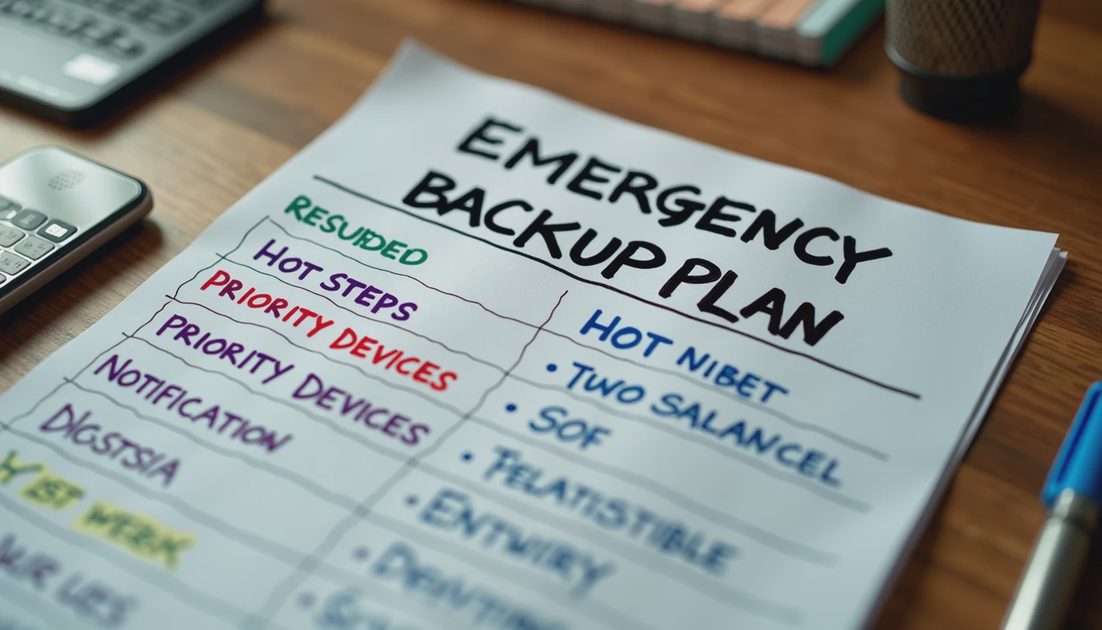
What Belongs on the One-Page Plan
Here is the part that usually causes trouble: people rely on memory or on a long document they never open under stress. The useful version fits on one page and answers only the questions that matter in the first ten minutes.
Core Sections
Restart order for modem and router, with the required wait time.
Phone hotspot steps and where the hotspot password lives.
Which devices get priority if power is limited.
Who needs a quick notification if the outage will last more than an hour.
ISP account number and support line.
Location of spare cable, charger, and small UPS if you have one.
These six items cover most household outages without requiring special tools.
How I Keep the Plan Accurate
I update the page whenever equipment or carriers change. I also run a short drill once after any major change: disable the main Wi-Fi, enable the hotspot, and confirm the laptop can reach email and the main work tools. Ten minutes of testing while everything is calm prevents thirty minutes of improvisation when it is not.
Priority During an Outage
Priority | Action | Why |
|---|---|---|
1 | Switch critical device to hotspot | Protect the meeting or deadline in progress |
2 | Restart modem/router if time allows | Often restores the main connection |
3 | Notify key people | Reduces follow-up questions |
4 | Note start time and error lights | Speeds ISP conversation if needed |
5 | Decide what work can wait | Avoids overloading a phone connection |
The order is by impact, not by technical elegance. That ordering keeps the response calm.
Power and Devices Together
Internet and power often fail together in storms. The same page includes a short power section: which devices stay on a small UPS, which ones can wait, and where the flashlight and spare battery pack live. Having both pieces on one page prevents a second round of improvisation.
Most households never need the full plan. The value appears on the day they do. A calm, pre-decided sequence turns an outage from a scramble into a procedure. That difference is worth the ten minutes it takes to write the page and the ten minutes it takes to test it once.
Made simple. Write the backup steps while everything is still working. Less hassle when something fails.

The plan lives on paper near the desk and also as a short note in my phone. If the power is out, the paper is still readable. If I am away from the desk, the phone note is available. Redundancy here is deliberate and minimal.
I also include a short note about what can wait. Not every task needs to continue during an outage. Knowing in advance which work is truly time-critical prevents the panic of trying to keep everything running on a phone hotspot.
Neighbors who work from home have used the same one-page format. The ones who write it and test it once report that the next outage was noticeably less disruptive. The ones who only meant to write it still invent the process under stress. The difference is the paper, not the knowledge.
Under pressure, people do not rise to the level of their intentions. They fall to the level of their preparation. A one-page recovery plan is preparation that fits a normal household and still works when attention is limited.
The page is short on purpose so it can be followed when attention is limited. I update it whenever equipment or carriers change so the steps stay accurate. That maintenance takes minutes and keeps the plan trustworthy when it is needed.
Made simple remains the standard. A short written plan tested once is more valuable than a long plan that only exists in your head. Less hassle during an outage is the only reason the plan exists.
I keep the last outage date and what worked on the bottom of the page. Over time the plan gets more accurate because it is based on what happened in this house, not on a generic checklist from the internet.